

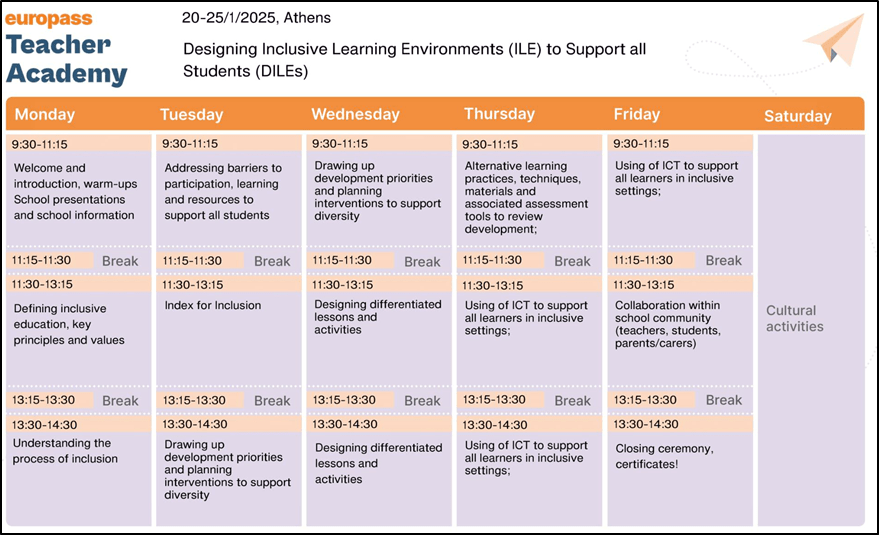
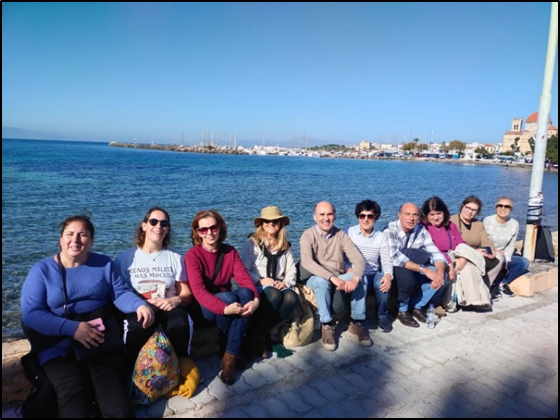
Two educators from St Nicholas College, Dingli Secondary School – Ms Joanne Valentine and Ms Noemi Deulofeu – recently attended the Erasmus+ Course ‘Designing Inclusive Learning Environments to Support all Students‘ at the Europass Teacher Academy in Athens, Greece. The course took place from Monday to Friday, with Saturday designated for cultural activities. Throughout the week, the program took place in the mornings, and in the afternoons, we explored the city of Athens on our own. On Saturday, in collaboration with the group of Portuguese teachers, we visited Aegina, a pistachio-producing island located near Athens.
Monday 20th January
The first day focused on school presentations, starting with Cyprus, followed by ice-breaking activities and the introduction of course participants. A presentation on Greece, its regions, and the course objectives was delivered. Information about the group was shared, which consisted of five Portuguese teachers (primary and secondary school teachers from different specialisations, sharing one Headmaster of all cluster schools, positively leading approximately 200-300 teachers), one Cypriot teacher (a primary school teacher, managing approximately 200 students with a particular focus on conflicts between refugee and local students), and two Maltese teachers. The session included an introduction to the humanistic participative model, cooperative strategies, and the concept of inclusion. Participants were also introduced to video content explaining different modes of applying inclusion methods for education. A very interesting video from a school in Barcelona was also shown to the participants followed by discussions focusing on the “road to inclusion”.
Read more: Designing Inclusive Learning Environments to Support all Students – An Erasmus+ Course in AthensTuesday 21st January
Presentations continued, with a focus on Portugal’s approach to education. The session delved deeper into inclusion strategies, exploring the principles of equity and equality. The Universal Design for Learning (UDL) framework was introduced, highlighting four key elements of inclusion: presence, participation, achievement, and the removal of barriers to learning. The session addressed how to support marginalized, excluded, or underachieving learners and explored the pillars of inclusion, including inequality, equality, equity, and justice.
Wednesday 22nd January
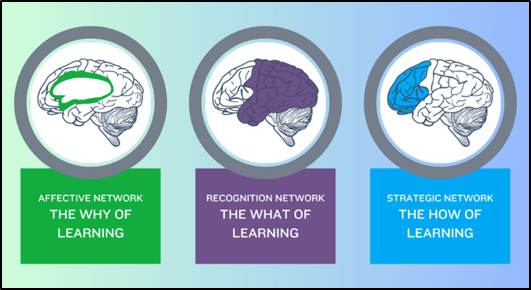
The concept of co-teaching was explored through an example in mathematics, explained by the Portuguese participants. UDL framework was discussed in-depth, with participants divided into three groups to gain a better understanding of how UDL works, including engagement, representation, and action. Tools such as Edutopia’s Check-in/Check-out system were presented. This method follows targeted students (mainly those that require support emotionally and socially) by staff members regularly, and acts accordingly upon their needs, presenting possible daily goals to improve and reflection after the day passed.
Some key concepts such as Vygotsky’s theories on collaboration and soft skills development through collaboration and digital tools (Padlet, Reader, NaturalReaders.com) were also explored during this session.
Thursday 23rd January:
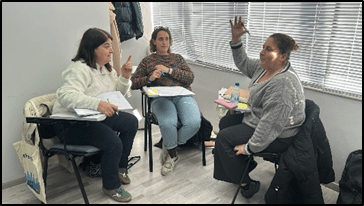
The knowledge gained on UDL the previous day was applied in group activities. Tasks were differentiated into three levels: advanced (extended task), main task, and differentiated tasks for students with special needs (Tier 3 and 2). Strategies to foster both extrinsic and intrinsic motivation were discussed, and participants were encouraged to offer students autonomy and responsibility. The focus was on UDL engagement, recognizing that curricula are often designed with the “average” student in mind. Participants also explored the use of Coggle (Mind Map) and watched a video on PBIS (Positive Behavioural Interventions and Supports) from the United States.

Friday 24th January
The last day began with our presentation on the Maltese Islands, the Maltese education system and how our school operates on a daily basis. We also showed them a video with the various activities we organised at our school during the past year.
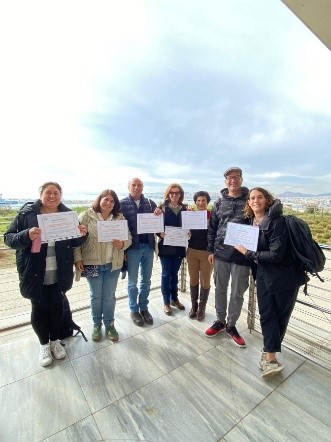
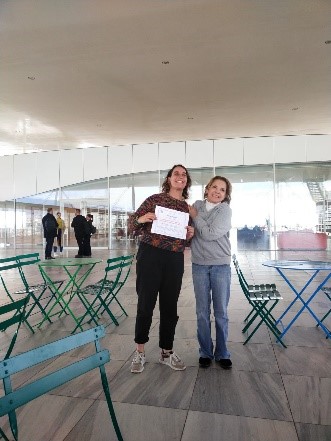
We then continued into a conclusion of all the course, we made sure all information was understood both in theory and practice, specifically the pragmatic outcomes. The last day we used it to make questions, share contacts and we also ended up visiting the Stavros Niarchos Foundation Cultural Centre (SNFCC) in Athens, which included a library tour.
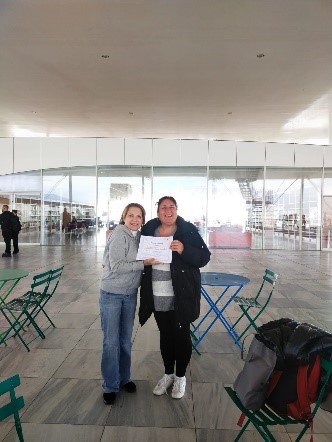
This visit provided a practical context for explaining engagement and differentiation in education, emphasizing collaboration and fostering an inclusive environment. A tour of the SNFCC was followed by a group session on Bloom’s Taxonomy and a story circle. This activity concluded the course in a collaborative experience, in which every person shared their personal highlights of the course, and together, we built a story that represented each and every one of us, through a creative end.
Learning Outcomes:
Participants gained an in-depth understanding of UDL guidelines and their practical application. The course fostered a broader understanding of diverse educational systems, particularly those in Portugal, Greece, Malta and Cyprus. Participants learned how to apply differentiation strategies to support inclusion and promote equity and justice. A key outcome was the realization that teaching is transitioning from traditional methods to a more differentiated approach. The course introduced Project-Based Learning (PBL) and cooperative strategies such as “Think, Pair, Share,” and emphasized the importance of fostering both extrinsic and intrinsic motivation in the classroom. The concept of “Multi-Tiered Systems of Support” and the application of Vygotsky’s theories were central to the discussions. Additionally, the course explored the importance of critical thinking and active learning strategies.
Conclusion:
The Erasmus+ course facilitated the development of essential knowledge and skills, bridging theory with practice. Meaningful interactions allowed participants to apply their newfound knowledge in real-world settings, particularly in fostering collaboration within diverse classrooms. The course highlighted the importance of adaptation and differentiation to accommodate various learning needs and cultural backgrounds. While the participants acknowledged that full implementation of UDL could be challenging, there was a shared commitment to improving teaching practices. It was also recognized that further training in the use of AI tools is necessary. The course underscored the need for greater support for educators both inside and outside the classroom, alongside a focus on becoming digitally competent educators. Awareness of key educational concepts such as UDL and differentiation was also recognized as essential for the development of future lesson plans.
This mobility was made possible thanks to St Nicholas College Accreditation funds, co-funded by the European Union.

 St.Nicholas College Malta